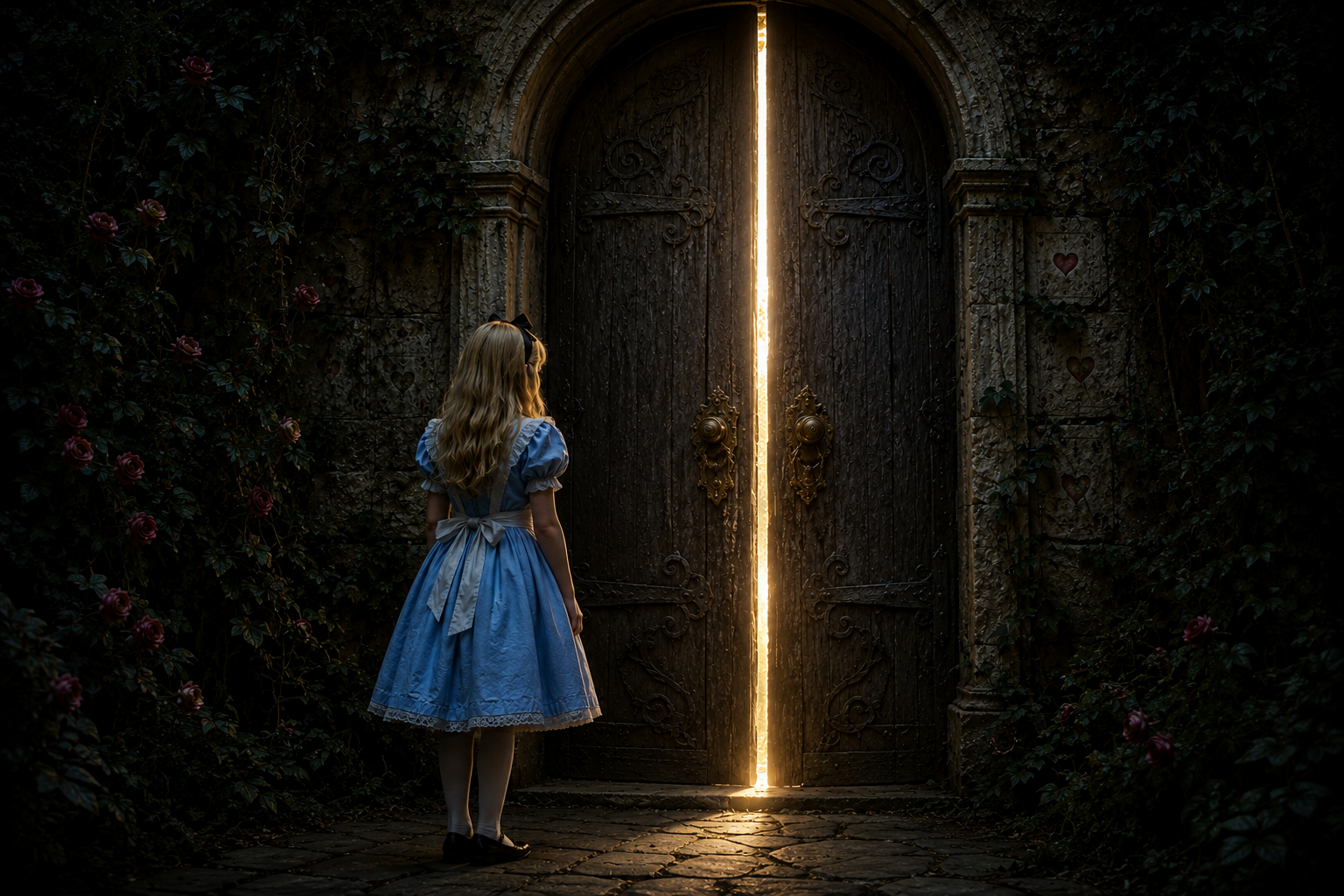
The door of connection
The doors to the world of the wild self are few but precious. If you have a deep scar, that is a door, if you have an old, old story, that is a door. If you love the sky and the water so much that you almost cannot bear it, that is a door. If you yearn for a deeper life, a full life, a sane life, that is a door.
-Clarissa Pinkola Estés
Your wild self, your true self, your core self- call it what you like. I sometimes think that children are much more in touch with their true selves, before the world conformed them through expectations and limitations (most necessary of course, but some drowning our authentic selves in the greater picture of what society deems right and valuable). When you look into a child’s eyes you see reflected there the endless possibilities, the joy, the unbridled hope. The purity of what is yet to come.
I came across this quote one day and it forced me to stop and reflect. I would like to add a door to the doors already listed if I could take such liberty – having children and becoming a parent is another door to our true forgotten selves. Children push our buttons in all the wrong ways and forces us to take introspection and to face the implicit memories of our own childhoods. In attachment theory the first 9 months of our lives set the stage for the type of parent we will become. Yes, the first 9 months of our lives – when we are helpless and vulnerable and totally dependent. Through the relationship with our caregivers during this crucial and vulnerable stage of development we learn to trust and to nurture and to respond to cues. All of which we need to parent.
Well, no-one has a perfect childhood and we all have hurts that we respond to in many ways. Parenting is our call to growth, our call to healing, our call to our true selves.
Daniel Siegal and Dr Tina Bryson comments in their book – The whole-brain child, that when you experience irrational, exaggerated emotions in response to something that your child does, it is often a trigger of an implicit memory of your own childhood. In my own childhood (being the middle child) I often felt left out and unheard. I realized that when I gave my children an instruction and they dismissed it, I immediately felt an overwhelming anger building up inside of me, but layered under it I was feeling lost and not worthy. That made me react in anger which negatively affected our relationship. But I should be grateful because it was one of my doors to my true self, where I had to face the memories of my childhood and integrate them into the present so that my reaction to my children would change. A call to a more integrated true self. That is just one example of how our children can trigger us, I am sure you can give me many more.
Children open up avenues that we have long since forgotten. As a child I loved science and biology. Through my very inquisitive four year old, I am now reading up on volcano’s and earth plates, fungi and spores, ferns and animals. I get to relive this side of me that I have forgotten about. Another door to my true self. My mother took my sister to art classes when she was in matric and instead of just waiting for her, she decided to give it a try. My mother had an abusive childhood and did not have a very high self-worth, she believed she couldn’t draw and that she wasn’t clever or good at anything. My mother started the art classes and now paints the most unbelievable works of art. I am so proud of her! She was brave enough to enter the door that opened to her true self and re-discovered that which she lost in childhood.
Is that not the most beautiful part of our broken humanity. The push and pull and call to healing that happens in everyday conflicts between ourselves and the people we love. If we are brave enough to look deeper, to stand still and question, and to enter, we often find the way to our true selves where we can become more integrated and more at peace. So connecting to another person, and especially another child, we are actually connecting to ourselves.
So how does this connection look? I often have parents in my therapy room that have forgotten how to just ‘be’ and to play. They want to engage through teaching or instructing – telling their children how to behave or asking them to label colours or count. I appreciate what they are doing, because instruction is important – we need to instruct and teach our children. But the door to connection lies in the letting go and giving your child the lead.
To understand how to connect you have to understand basic neurology. We all have a right and a left brain hemisphere. The right hemisphere is concerned with images, emotions and personal memories. Our left hemisphere is where logic resides. Children have an underdeveloped left hemisphere which is why they often react with their right brain in an irrational manner, loaded with intense emotions. So if you want to connect with your child – your right-brain will have to take the lead. Here is what connection would look like. Your child is playing with his cars, so you go down onto his level and make eye contact. Because you want to connect right-brain to right-brain you might ask yourself: “I wonder why my child loves to play this game?”, ‘I wonder what he is feeling right now?’, ‘I wonder what he will do next?’ And then wait until you feel emotionally attuned to your child.
Then you can join in the play – following their lead. If they drive cars up and down, you do the same. If they are having a tea party, you drink tea and eat pretend cakes with them. You become the play partner and try to find the emotions and images in the play – not the logic. The logic has a definite place, but only comes after connection.
I hope this gives you a guideline of how to open the door to connecting to your child (and yourself). When doing DIR/Floortime work I often ask my parents to try and spend 20 minutes of uninterrupted time with their children when they can – connecting and playing in this manner. I know it is a big ask, we often do not feel like playing, it feels like wasting time, it takes time away from all the other tasks that we need to do. But if we do it, we open the door – not only to a relationship with our children, but also to a place where stress falls away and when we begin to see things in perspective. A door to our true selves, where we need to face our disappointments and hurts, but also where we get to integrate and heal so that we can be whole play partners who understand the precious gift of connection.
Related Posts